Scale, Scum and Shine: A Londoner’s Field Guide to Hard Water
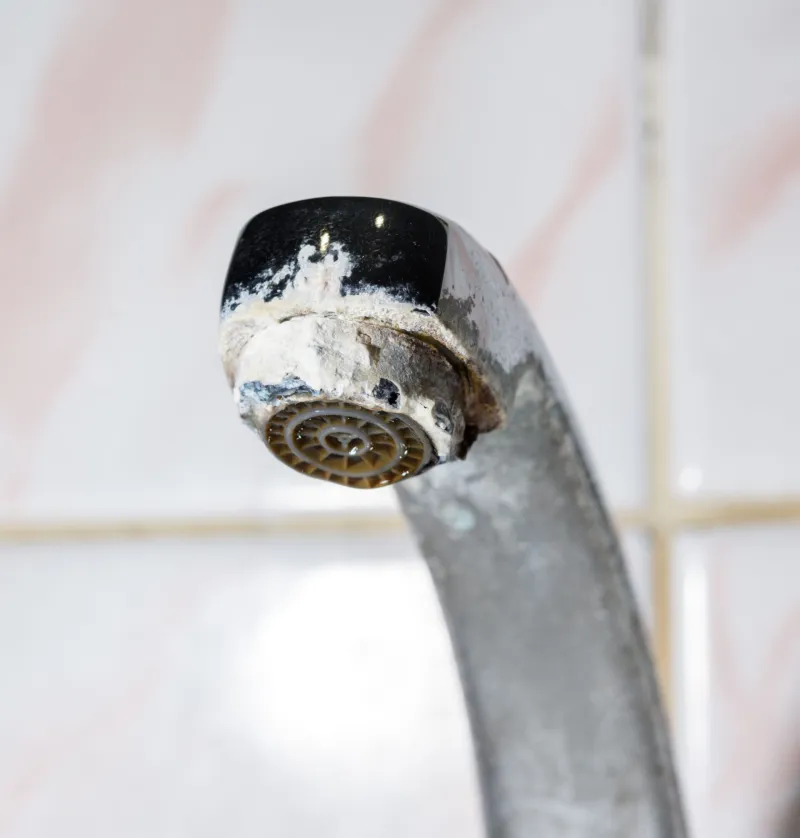
Photo: limescale on chrome kitchen tap close up London home, via masterrooter.com
London water has a reputation. It tastes fine in tea, but leave it in a kettle for a fortnight and you’ll find a pale, crusty ring that looks like a geology exhibit. That’s hard water at work. And while it isn’t dangerous, it is relentless: it spots shower screens, furs up taps, dulls glassware and makes bathroom cleaning feel like a losing battle. The good news is that limescale is predictable. Once you know what it is and which surfaces can take which treatment, you can keep on top of it without scrubbing your chrome into a scratched mess.
What hard water is actually doing
Hard water carries dissolved minerals, mainly calcium and magnesium. In London and much of the South East, those minerals are present in relatively high amounts. While the water is sitting in a pipe or a glass, everything looks clear. Heat it or let it evaporate, and the minerals can settle out as calcium carbonate — the chalky, crusty stuff we call limescale. That’s why kettles, shower screens and tap spouts are ground zero: they’re where water gets hot, splashes and dries repeatedly.
The chemistry in plain English: scale is alkaline, so acids dissolve it. That’s why vinegar, citric acid and most commercial descalers work. But acid isn’t fussy. Leave it too long on natural stone, damaged enamel or certain metals and it can etch or dull the surface. Abrasive pads can also scratch. The trick is to match the method to the material, then use time rather than muscle.
Kitchen: kettles, taps and glassware
The kettle is the easiest place to start. Descale every four to six weeks if you use it daily — more often if you live in a very hard water area. A shop-bought kettle descaler is convenient and usually based on citric or sulfamic acid; follow the packet and don’t overdo it. A gentle DIY option is a tablespoon or two of citric acid powder in half a kettle of water, brought to the boil and left to sit for 15–20 minutes before rinsing thoroughly. White vinegar works too, but the smell lingers and can be unpleasant in a small flat. Never fill a hot kettle with cold vinegar or use a metal scourer inside.
For tap spouts and aerators, unscrew the nozzle if you can and soak it in a small bowl of citric acid solution. For chrome taps, wipe with a weak vinegar or citric solution, then rinse and dry immediately. Don’t leave acid sitting on chrome, and don’t use it on brushed brass, gold finishes or natural stone splashbacks. Glassware that looks cloudy may be etched rather than scaled — if vinegar doesn’t shift it after a short soak, the damage is likely permanent and more acid won’t help. A dishwasher rinse aid can reduce spotting, but it won’t remove existing scale.
Bathroom: shower screens, tiles and showerheads
Shower screens are where London hard water makes its most public appearance. The trick is to squeegee after every shower — ten seconds now saves ten minutes later. For existing film, a 50/50 white vinegar and water spray, left for five minutes, will loosen light scale. Rinse well and dry. For heavier build-up, use a citric acid gel or a dedicated bathroom descaler. Avoid abrasive cream cleaners on acrylic screens and never use acid on natural stone tiles or marble. If your shower screen has a protective coating, check the manufacturer’s advice before using strong descalers.
Showerheads benefit from a monthly soak: unscrew, place in a bowl of citric acid solution for 30 minutes, then rinse. Don’t soak rubber seals in strong acid for long periods. Tiles and grout need a different approach: scale sits on the surface, but grout is porous. Use a mild descaler, agitate with a soft brush, rinse and dry. Bleach doesn’t dissolve scale; it just makes it look cleaner for a day.
Utility and laundry
Washing machines and dishwashers suffer quietly. Run a monthly hot maintenance cycle with a proprietary cleaner or a citric acid product designed for appliances. Clean the rubber door seal by hand — scale and detergent residue collect there. If your machine has a salt compartment, keep it topped up. In rented flats, check whether the appliance manual is still in the cupboard; it will tell you what the manufacturer recommends and what might void a warranty.
Shop-bought vs DIY
Shop-bought descalers are formulated for specific surfaces and often carry clear instructions. They’re handy for kettles, showerheads and heavy bathroom scale. DIY citric acid is cheap, effective and easy to control, but it still needs respect: don’t use it on natural stone, don’t leave it on metal for hours, and rinse thoroughly. White vinegar is the cupboard staple, but the smell can be a downside in small London flats. Avoid mixing products, especially anything containing bleach with acid — that can release harmful fumes.
A realistic prevention routine
Weekly: squeegee shower screens, dry taps and shower fittings, wipe the kitchen sink and draining board, and rinse glasses before they dry. Monthly: descale the kettle, soak the showerhead, run an appliance maintenance cycle, and check the dishwasher filter. Seasonally: clean behind taps, pull out the washing machine, and inspect grout for trapped scale. If you’re a renter, flag persistent limescale to your landlord — it’s often a maintenance issue rather than a cleaning failure, especially around older London plumbing.
The aim isn’t a sterile, acid-soaked home. It’s small, regular habits that stop scale from becoming a weekend project. London water will always leave its calling card. With the right method, you can make sure it doesn’t leave a permanent one.